
Pelvic floor exercises during pregnancy are the unsung hero of growing and birthing a baby. The pelvic floor is a group of muscles and ligaments at the base of your pelvis, forming a supportive sling that holds up your bladder, bowel, and uterus. During pregnancy, this area takes a beating. Extra weight, hormonal changes like relaxin and progesterone, and the demands of labor all place enormous stress on these muscles.
Strengthening your pelvic floor now will protect you later. These exercises reduce the risk of urinary incontinence, fecal incontinence, and pelvic organ prolapse. They prepare your body for smoother labor, lower the chance of tearing or episiotomy, and help with postpartum recovery. A strong pelvic floor even eases lower back pain and supports better posture. In other words, this is not optional self-care – it’s survival training for your pelvis.
Let me show you exactly how to add pelvic floor training to your maternity workout!

This post may contain affiliate links. If you make a purchase after clicking one, I may receive a small commission at no cost to you.
Pelvic Floor Exercises You Can Do Right Now
These are simple moves you can practice at home. You don’t need fancy equipment, but you do need consistency. Each exercise builds strength, coordination, and control.
Classic Kegel Exercise

Kegels are the foundation of pelvic floor training.
- Sit or lie comfortably.
- Squeeze the muscles you’d use to stop urination midstream.
- Hold for 5 seconds, then release.
- Repeat 10-15 times, three sets per day.
Tip: If you’re not sure you’re doing it correctly, a pelvic floor physiotherapist can guide you using biofeedback tools.
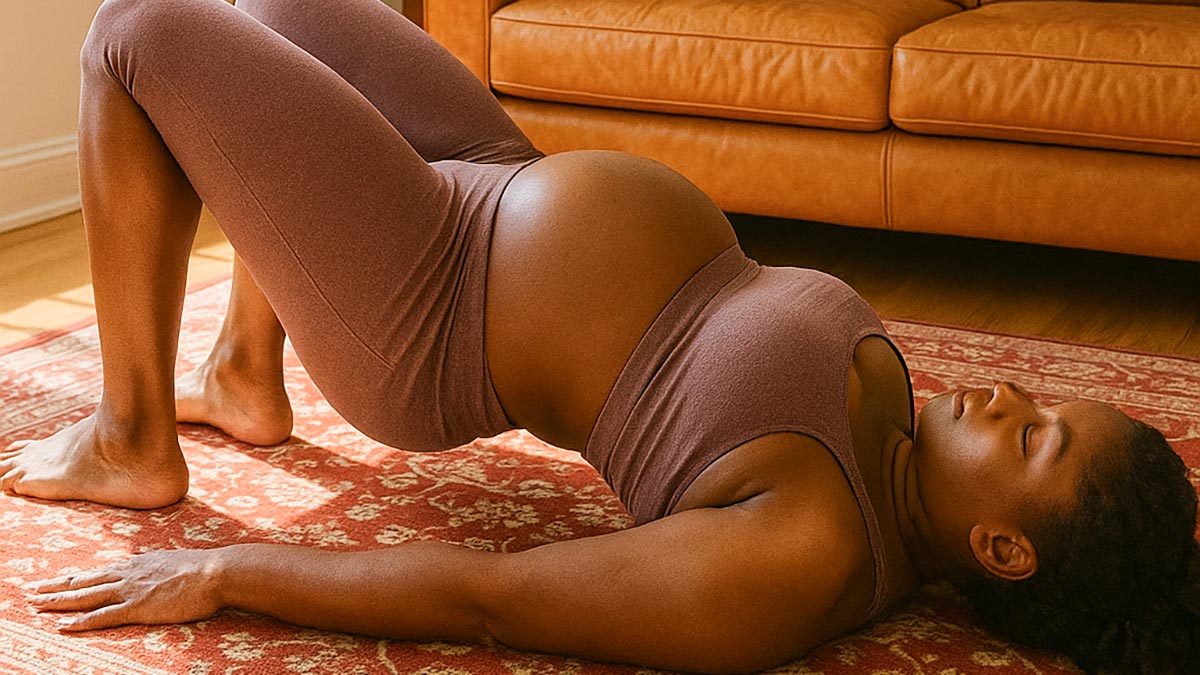
Bridge with Pelvic Floor Engagement

Bridges add strength to both the glutes and pelvic floor.
- Lie on your back with knees bent and feet flat.
- Inhale, then exhale as you lift your hips.
- Gently squeeze your pelvic floor as you rise.
- Hold for a breath, then lower down.
Variation: Place a stability ball between your knees to add inner thigh engagement.
Squats (Supported if Needed)

Squats are a prenatal yoga and Pilates favorite.
- Stand with feet hip-width apart.
- Lower into a squat as if you’re sitting in a chair.
- Keep your pelvic floor lightly active.
- Return to standing slowly.
Variation: Add a resistance band above the knees for more challenge.
Bird Dog with Pelvic Engagement

This builds balance and core stability without strain.
- Start on hands and knees.
- Extend one leg back and the opposite arm forward.
- Engage your pelvic floor to hold steady.
- Switch sides.
Side-Lying Leg Lifts

Side-lying moves are gentle and effective.
- Lie on one side with your head propped up.
- Engage your pelvic floor as you lift the top leg.
- Lower slowly.
- Repeat for 10 reps, then switch sides.
Tips for Getting it Right
Finding your pelvic floor is the first step. Imagine stopping gas or halting urine midstream – but don’t actually practice while peeing. That trick is for identification only.
You’ll know you’re doing it right when you feel a squeeze and lift inside, not when your thighs or buttocks are tightening. Breathe normally. Never hold your breath.
Good posture helps. Practice while sitting, lying down, or standing tall. Build the habit by pairing exercises with daily routines – like brushing teeth or waiting for your coffee to brew.
Other supportive habits matter, too. Prevent constipation with fiber and water, because straining weakens your pelvic floor. Pair exercises with diaphragmatic breathing for better coordination. And if you’re unsure, seek out a women’s health physical therapist for guidance.
Signs of a Weak Pelvic Floor
If you’re already experiencing symptoms, these exercises become even more important. Warning signs include urinary leakage when you sneeze or laugh, difficulty controlling gas, or a frequent urge to urinate. A feeling of heaviness or bulging in the vagina can indicate prolapse. Some women also notice a connection between weak pelvic floors and abdominal muscle separation, known as diastasis recti.
If you’re experiencing any of these issues, pelvic floor exercises will usually help, but more serious conditions will require consultation with your doctor for a complete game plan.
What Not to Do During Pregnancy
- Avoid exercises that strain the pelvic floor.
- Do not overexert or hold contractions too long.
- Skip high-impact workouts that increase intra-abdominal pressure, such as sit-ups or crunches, especially later in pregnancy.
- Never hold your breath during pelvic exercises.
- Please, don’t make a habit of stopping urine midstream – that can actually harm your bladder.
- Don’t lift heavy objects with poor posture.
And never ignore persistent symptoms. Seek help from your obstetrician, midwife, or a pelvic floor physiotherapist.
When to Start (and Stop) Pelvic Floor Exercises
The best time to start is, like, yesterday. These exercises are safe in all trimesters, though you may need to adapt as your body changes.
You don’t need to stop before labor. In fact, practicing in the final weeks helps you focus on relaxation and coordination as well as strength. Many women add perineal massage at this stage to prepare tissues for birth.
Make these exercises part of your routine. Do them daily, stay consistent, and don’t hesitate to get professional support if you need it. Follow trusted guidelines, such as those from ACOG or the NHS, and know that every squeeze is a step toward a smoother pregnancy and a stronger postpartum recovery.
After delivery, begin again gently. Even if you had a C-section, your pelvic floor needs recovery because pregnancy itself weakens the muscles. Always check with your healthcare provider before restarting.
Before You Go…
It’s obvious you care about your health. So make sure you’re taking the best prenatal vitamin for your specific needs!