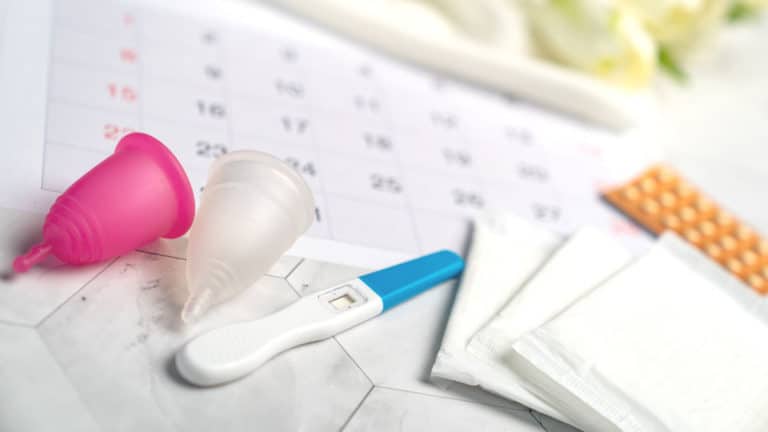
If you’re still trying to get pregnant or just found out you’re pregnant, this is the article for you! A whole bunch of exciting stuff happens in the first 6 weeks of pregnancy, some of it before you even conceive. This guide is intended to show you what you can expect from your pregnancy as you come upon each week.
If you don’t have the slightest clue what your conception date was, you may be trying to figure out how far along you are in your pregnancy based on early signs of pregnancy. But because symptoms strike every woman so differently – or not at all – you shouldn’t rely solely on symptoms to tell you IF or WHEN you got pregnant.
See a doctor for an evaluation and ultrasound! It’s the most accurate way to find out your due date if your calendar isn’t any help. Don’t be embarrassed to say you have no idea when your last period was because believe me, you’re not the first.
If you aren’t already, you need to be taking a prenatal multivitamin ASAP and throughout your whole pregnancy. Don’t know where to start? No worries! I’ve done all the research for you and created a list of the best prenatal vitamins available, including recommendations based on your specific needs.
Choose Your Week
- Pregnancy Week 1
- Pregnancy Week 2
- Pregnancy Week 3
- Pregnancy Week 4
- Pregnancy Week 5
- Pregnancy Week 6
Pregnancy Week 1 Development
Here’s something that might surprise you: During the first two weeks of pregnancy, you’re not actually pregnant!
Because it’s difficult to pinpoint the exact date of conception, doctors calculate pregnancy from the first day of your last menstrual period. They assume you’ll ovulate and conceive roughly two weeks later.
That means when you’re officially 40 weeks pregnant, your baby has actually been developing for about 38 weeks.
Confused yet? Of course you are. Science does that.
What’s Happening During Week 1?
Believe it or not, week 1 of pregnancy is literally just your period.
Your body is shedding the uterine lining it built up during your previous menstrual cycle because pregnancy didn’t occur.
Your symptoms might include:
- Bloating and cramping
- Irritability and mood swings
- Lower abdominal pain
- Fatigue
- Menstrual bleeding
Sound familiar? You’ve probably been through week 1 plenty of times already, so you’re practically a pro!
Can You Get Pregnant If You’re Overweight?
If you’re overweight or obese and worried about your chances of getting pregnant, here’s some encouraging news: Your weight doesn’t automatically mean you’ll struggle with infertility.
While carrying excess weight can affect hormone levels, ovulation, and fertility, plenty of overweight women conceive naturally without difficulty.
Certain medical conditions, such as polycystic ovary syndrome (PCOS), can make conception more challenging. However, fertility problems can affect women of any size.
The important thing to remember is that your weight is just one piece of the fertility puzzle.
Does Being Overweight Mean Your Baby Will Have Health Problems?
Absolutely not! Being overweight or obese during pregnancy doesn’t guarantee that you or your baby will experience complications.
However, it is important to understand that obesity increases the risk of certain pregnancy complications, including gestational diabetes, high blood pressure, preeclampsia, and problems with fetal growth.
I weighed more than 260 pounds during both of my pregnancies. Despite my weight, I never developed gestational diabetes or high cholesterol, and I only experienced high blood pressure toward the end of my second pregnancy.
Today, my children are twelve and nine years old. Both are of average weight and have no health problems related to obesity.
Of course, my personal experience doesn’t mean those risks don’t exist. It simply shows that a healthy pregnancy and healthy children are absolutely possible at a higher weight.
A child’s future weight and health are influenced by many factors, including genetics, their environment, nutrition, physical activity, and potentially conditions during pregnancy.
You can’t control every factor, but establishing healthy habits for your family is one positive step you can take.
Can Losing Weight Improve Your Chances of Conceiving?
If you’re overweight and trying to get pregnant, making healthy lifestyle changes before conception may help improve your fertility.
For some women, particularly those who have irregular periods or don’t ovulate regularly, losing even a modest amount of weight can help restore ovulation.
Research has found that losing around 5% of your body weight may improve reproductive function in certain women with obesity. However, weight loss doesn’t guarantee pregnancy, and its benefits vary depending on the underlying cause of infertility.
You don’t necessarily need to reach your ideal weight before trying to conceive. Focus on nutritious foods, regular physical activity, and working with your healthcare provider to address any conditions that might affect your fertility.
And remember: You don’t have to be a certain size to deserve a healthy, happy pregnancy!
This post may contain affiliate links. If you make a purchase after clicking one, I may receive a small commission at no cost to you.
Pregnancy Week 1 Video
Pregnancy Week 2 Development

There’s still no baby in there yet, but this is when things start to get exciting!
During pregnancy week 2, your body is preparing to release an egg from one of your ovaries. This process is called ovulation, and it’s what makes conception possible.
How Long Do You Have to Get Pregnant?
Once an egg is released, it only survives for about 12–24 hours. That’s a pretty small window to make a baby!
Fortunately, sperm can survive inside your reproductive tract much longer – sometimes up to five days. This means you can get pregnant from having unprotected sex up to five days before ovulation even happens.
Your fertile window includes the five days leading up to ovulation and the day you ovulate. Your chances of conceiving are generally highest during the day or two before ovulation.
Of course, pregnancy isn’t guaranteed just because you get the timing right. A healthy sperm still has to fertilize the egg, and several other things have to go right before a pregnancy can begin.
Sometimes it happens on the first try. Other times, it takes months. Baby-making isn’t always as easy as your high school health teacher made it sound!
What Happens When You Ovulate?
Typically, one egg is released during each menstrual cycle. Occasionally, though, your ovaries release more than one. If two eggs are released and both are fertilized by different sperm, you can end up with fraternal twins!
Identical twins happen differently. They develop when a single fertilized egg splits into two embryos. In rare cases, embryo splitting can also result in identical triplets.
Sometimes, your body doesn’t release an egg at all. This is called an anovulatory cycle, and it can happen because of hormonal imbalances, stress, illness, significant weight changes, or excessive exercise.
An occasional cycle without ovulation isn’t necessarily cause for concern, but if you’re experiencing consistently irregular periods or having trouble conceiving, it’s worth discussing with your doctor.
When Does Ovulation Actually Happen?
Here’s something that trips up a lot of women trying to conceive: Not everyone ovulates on day 14 of their cycle! Day 14 is simply an estimate based on a typical 28-day menstrual cycle.
In reality, ovulation usually happens about 12–14 days before your next period, so the exact day depends on the length of your cycle. Even women with fairly regular periods can ovulate earlier or later than expected.
And trust me, I learned this lesson the hard way.
With both of my pregnancies, I discovered that I ovulated around day 21 of my cycle!
It took me six months to get pregnant the first time because we kept having sex too early in my cycle. By the time my actual fertile window rolled around, we were getting too tired to keep up with our daily baby-making schedule.
Romantic, right?
A series of ovulation predictor kits from Dollar Tree finally helped me figure out my body’s schedule.
You don’t need expensive equipment to track ovulation, either. Inexpensive test strips can work well, and you can also order ovulation predictor kits online. These tests detect a surge in luteinizing hormone (LH), which usually occurs about 24-36 hours before ovulation. A positive test can help you identify your most fertile days.
And here’s some good news: You don’t have to have sex every single day to get pregnant. Every day or every other day during your fertile window is generally enough to maximize your chances.
Signs You’re About to Ovulate
Your body actually gives you several clues when ovulation is approaching. You just have to know what to look for!
1. Changes in Your Basal Body Temperature
Your basal body temperature (BBT) is your body’s temperature when you’re completely at rest. After ovulation, rising progesterone levels typically cause your temperature to increase slightly, often by about 0.5°F.
Some women track this by taking their temperature first thing every morning, before getting out of bed. Here’s the catch: Your temperature usually rises after ovulation has already happened.
That means BBT tracking is better for confirming ovulation and identifying patterns over several cycles than predicting exactly when your egg will be released.
Personally, I could never distinguish a big enough temperature change to figure out when I was ovulating. Those little thermometer readings just weren’t doing it for me!
2. Changes in Your Cervical Mucus
You know that gooey stuff that seems determined to ruin all your underwear? That’s cervical mucus, and it can actually be one of your best clues that ovulation is approaching!
As estrogen levels rise, your cervical mucus typically becomes more abundant, clear, slippery, and stretchy. At its most fertile, it often resembles raw egg whites.
This type of mucus helps sperm survive and travel through your reproductive tract, making it easier for fertilization to occur.
When you notice that stretchy, egg-white cervical mucus, it’s go-time! Tell your partner it’s time for date night.
What Happens If the Egg Is Fertilized?
If a sperm successfully fertilizes the egg, the two combine to form a single cell called a zygote. This usually happens in one of your fallopian tubes, not your uterus. The zygote begins dividing into more cells as it travels toward your uterus over the next several days.
But there’s still another important step before pregnancy is established: implantation! That typically happens about 6–12 days after ovulation, when the developing embryo attaches to your uterine lining.

Pregnancy Week 2 Video
Pregnancy Week 3 Development
Where is the baby located at 3 weeks?
Right now, your egg is probably being fertilized somewhere inside the Fallopian tube, on its way to your warm, squishy uterus.
What does a baby look like at 3 weeks?

- Average fetal length at 3 weeks: 1/20th of a millimeter
- Average fetal weight at 3 weeks: next to nothing
Week 3 of pregnancy is when your baby actually starts to exist! Just a cluster of cells the size of a grain of salt (called a blastocyst), the cells are beginning to multiply. The heart, brain, spinal cord, and digestive system will start to develop immediately.
Though it seems teeny tiny at less than the size of a pin head, it could actually be seen if it were on the outside, like the period at the end of this sentence.
Pregnancy Week 3 Symptoms
Believe it or not, there are a couple of signs that can occur in week three to indicate you’re pregnant – but most women won’t notice them.
There could be a mild feeling of pressure or cramping as the fertilized egg implants in your uterus. Some women even experience a metallic taste in their mouths, like sucking on pennies! (This might not go away for a while, either, but it can be controlled with citric drinks, sour candy, and brushing your tongue when brushing your teeth.)
Pregnancy Week 3 Video
Pregnancy Week 4 Development
Where is the baby located at 4 weeks?
Your baby has finally finished the journey from your ovary down the fallopian slip ’n’ slide to your uterus!
What does a baby look like at 4 weeks?

- Average fetal length at 4 weeks: 2 millimeters
- Average fetal weight at 4 weeks: next to nothing
The blastocyst splits into two groups – what will be your baby, and the placenta that nourishes it. The placenta starts out as a yolk sac, which grows while the amniotic sac (bag of water) forms around the baby. It’s producing the hCG flowing through your body (that makes you crazy!).
The other half is now an embryo with three layers of cells. The first (the endoderm) turns into your baby’s digestive system, thyroid, and lungs. The second (the mesoderm) becomes the baby’s heart, genitals, bones, blood system, and muscles. The outermost layer (the ectoderm) becomes the baby’s nervous system (including the brain), hair, skin, nails, breasts, sweat glands, and eyes. Arm and leg nubs are sprouting!
If you’re having twins, you might already be able to see two little bundles of cells on a clear ultrasound!
Pregnancy Week 4 Symptoms
This week may feel a lot like PMS, which can be disappointing when you don’t know you’re pregnant yet.
You can have cramping, bloating, mood swings, tender breasts… You may even have some spotting of blood, which can occur when the fertilized egg fully implants into the uterus. However, most women never feel or see a thing (I never did!).
A super-early-detection pregnancy test, like the Clearblue Digital pregnancy test I used to find out I was pregnant with my son, can turn up positive now!
The hormones flowing through your body also tend to cause mood swings throughout the first trimester before leveling off. If you’re feeling a little crazy, sad, or manic, just remind yourself there’s lots of weird stuff happening in your body and it won’t last forever.
Pregnancy Week 4 Video
Pregnancy Week 5 Development
How many months pregnant is 5 weeks?
5 weeks equals one month pregnant!
Where is the baby located at 5 weeks?
Firmly implanted in your uterus, the baby is hanging out with a cozy little yolk sac that will later become the placenta.
In the cases of a gestational sac miscarriage at 5 weeks, the baby never makes it past the blastocyst phase to become an embryo. While still a painful loss, these empty sacs are usually a sign of an unviable pregnancy.
How does a baby look at 5 weeks?

- Average fetal length at 5 weeks: 3 millimeters
- Average fetal weight at 5 weeks: next to nothing
Not gonna lie, your baby is ugly right now. It looks like a friggin’ tadpole, with a tail and everything. The part you’ll fall in love with, though, is the developing heart. The neural tube is also starting to form, which will later be your baby’s brain and spinal cord.
It’s super important to stay away from hot tubs, saunas, and anything else that dramatically raises your body temperature throughout pregnancy, ESPECIALLY while the neural tube forms.
Pregnancy Week 5 Symptoms
Who gives a crap about your symptoms when you can finally CONFIRM you’re pregnant!? Yes, mama, you can finally take any old drugstore pregnancy test and get a positive result at this point, thanks to the high level of the hCG hormone in your body. I enjoyed this part so much, I peed on at least 5 of them the first time I was pregnant just because I loved seeing the result pop up!
Unfortunately, you may suddenly feel exhausted or nauseous. Excessive saliva may give you a false sense of wanting to throw up, too. Roughly half of all pregnant women experience morning sickness, which means half never throw up (like me!). And FYI, “morning” is just a thing people say – it can strike at ANY time of the day (or night).
If you’re throwing up so much you can’t eat or keep down any food at all, your doctor needs to know right away because this is a sign of hyperemesis gravidarum, a serious condition that can last throughout pregnancy and lead to bed rest and IV nutrition.
You may find yourself slapping your partner’s hands away from your boobs as they become tender. Food cravings and aversions can even start this early!
In pregnancy week 5, cramps and bleeding are not necessarily a sign of anything bad happening. It’s possible your little bean had a forceful implantation upon landing in your uterus. But if the bleeding gets heavy like a period or the cramps are more severe than period pain, talk to your doctor!
One of the least talked about side effects of pregnancy is your suppressed immune system. Because a baby is technically a foreign body inside YOUR body, your immune system goes lax so that your baby isn’t rejected. This means throughout your entire pregnancy, you’ll be more prone to catching colds, the flu, and a host of other illnesses.
What’s worse is much of your usual medicated relief, like Chloraseptic for a sore throat, is a no-no during pregnancy. Just before 6 weeks into my first pregnancy, I was bedridden for two weeks with an upper respiratory infection that produced enormous amounts of green mucus and a dangerously high fever – one of the sickest times of my life.
Because it was viral, not even pregnancy-safe antibiotics could ease my discomfort. I worried for weeks that my high fevers were going to damage the fragile embryo in my womb – until a Neural Tube scan finally showed she was 100% perfect.
Talk to your doctor about what medicines are safe to take, and use Tylenol (NOT Advil) to keep any fevers under control, especially in the first several weeks of pregnancy when the oh-so-important neural tube is developing.
Pregnancy Week 5 Video
Pregnancy Week 6 Development
How many months pregnant is 6 weeks?
6 weeks equals over one month pregnant!
Where is the baby located at 6 weeks?
Baby hasn’t moved around much yet, since she doesn’t need a lot of space – but you can now officially call that bundle of joy an embryo instead of a blastocyst!
Brace yourself for one of the most emotional moments of your life, because this week you might be able to hear the baby’s heartbeat (well, not really, but vibrations that sound like a heartbeat) at the doctor’s office with a vaginal ultrasound! If you do hear the “heartbeat” at 6 weeks, the chance of miscarriage drops to an average of 22%.
What does a baby look like at 6 weeks?

- Average fetal length at 6 weeks: 1/4 inch
- Average fetal weight at 6 weeks: next to nothing
There’s a creepy-cute little face with a nose and jaw starting to form on the tadpole! The lungs have started developing, but have a long way to go. The hand and feet buds are webbed, but will eventually turn into fingers and toes. Baby’s all curled up in the “fetal position” and will stay that way for a while.
If an ultrasound reveals an empty gestational sac at 6 weeks, one of two things may be the cause: you’re not actually 6 weeks along like you and your doctor calculated, or you have an unviable pregnancy. Unless your doctor can confirm the latter with certainty, don’t panic yet, mama – another ultrasound in a week or two may reveal a little bean (and an adjusted due date!).
Pregnancy Week 6 Symptoms
Bad news: frequent urination can start already. Not because baby’s fat butt is on your bladder yet, but because of increased blood flow to your pelvic area and increased efficiency of your kidneys. On the bright side, that increased blood flow can make sexy times a lot more enjoyable!
Heartburn and indigestion are symptoms that strike most pregnant mothers at some point. This can begin around week 6 as well, so take your time eating and don’t wear tight pants (they push on your stomach, increasing the risk). Also, it’s just an old wives’ tale that heartburn is a sign your baby will have lots of hair at birth. I never had any heartburn with either pregnancy, and both babies came out with a decent mop of hair!
In pregnancy week 6, cramps and bleeding are usually still normal. If the cramps are severe (worse than period pain) or the bleeding becomes heavy like your period, call your doctor right away. Plus side: your breasts (and nipples!) are getting bigger. Downside: They probably hurt, so playtime with your lover can get tricky.
As for gas and bloating, progesterone is the culprit here, but you can blame it on the dog. Eat fiber and drink water to prevent constipation. Being backed up will only make the discomfort from bloating worse!
Continuing symptoms:
- mood swings
- fatigue
- nausea
- tender breasts
- food cravings and aversions